Planning your trip and looking for the best things to do in Kato Paphos? We have put this guide together specifically for visitors staying in the area, drawing on first-hand knowledge of the neighbourhood, its rhythms and its practical realities. Kato Paphos is the coastal resort hub of Paphos, built around the harbour, a medieval castle and some of the most significant archaeological remains in the eastern Mediterranean. As the most walkable, well-connected part of the city, it puts UNESCO-listed ruins, sandy beaches, boat tours and excellent Cypriot restaurants all within easy reach. This guide covers every major sight, practical opening hours, honest time estimates and a day-by-day structure to help you plan the best possible 2026 visit to Kato Paphos.
Why Kato Paphos Is the Ideal Base for Your Cyprus Holiday
Kato Paphos sits at the southern tip of the city, where the harbour meets the sea and ancient history is a short walk from the beach. Unlike the upper town (Ktima), which is quieter and more residential, Kato Paphos is built for visitors. The harbour promenade, the archaeological park entrance, the coastal path and the main beach zones are all connected by a flat, walkable network of streets, making this the only part of Paphos where you genuinely do not need a car for your first few days.
Staying in a self-catering apartment here adds a layer of flexibility that hotels rarely match. You can pick up fresh produce from local shops, prepare an early breakfast before the archaeological park opens at 08:30 and pack a cool bag for a beach afternoon without depending on restaurant timings. The whole neighbourhood rewards slow, independent exploration, which is exactly the kind of travel that suits Kato Paphos best. We always recommend guests use those first mornings to reach the ruins at opening time, before the tour groups arrive, as the difference in atmosphere is remarkable.
For first-time visitors, the consensus among travel writers and local guides is consistent: three days covers the headline kato paphos attractions comfortably, while five to seven days allows you to add day trips to Coral Bay, the Akamas Peninsula, Lara Bay and the Troodos Mountains. A self-catering base makes that kind of flexible, longer stay both practical and genuinely good value. If you are deciding how many days to book, three nights is the absolute minimum. Five or more lets the destination breathe and opens up a wider range of things to do in Kato Paphos beyond the core archaeological circuit. Our Paphos day trip routes guide has detailed suggestions for those longer stays.
The Paphos Archaeological Park: The Heart of Kato Paphos
 AI-generated image
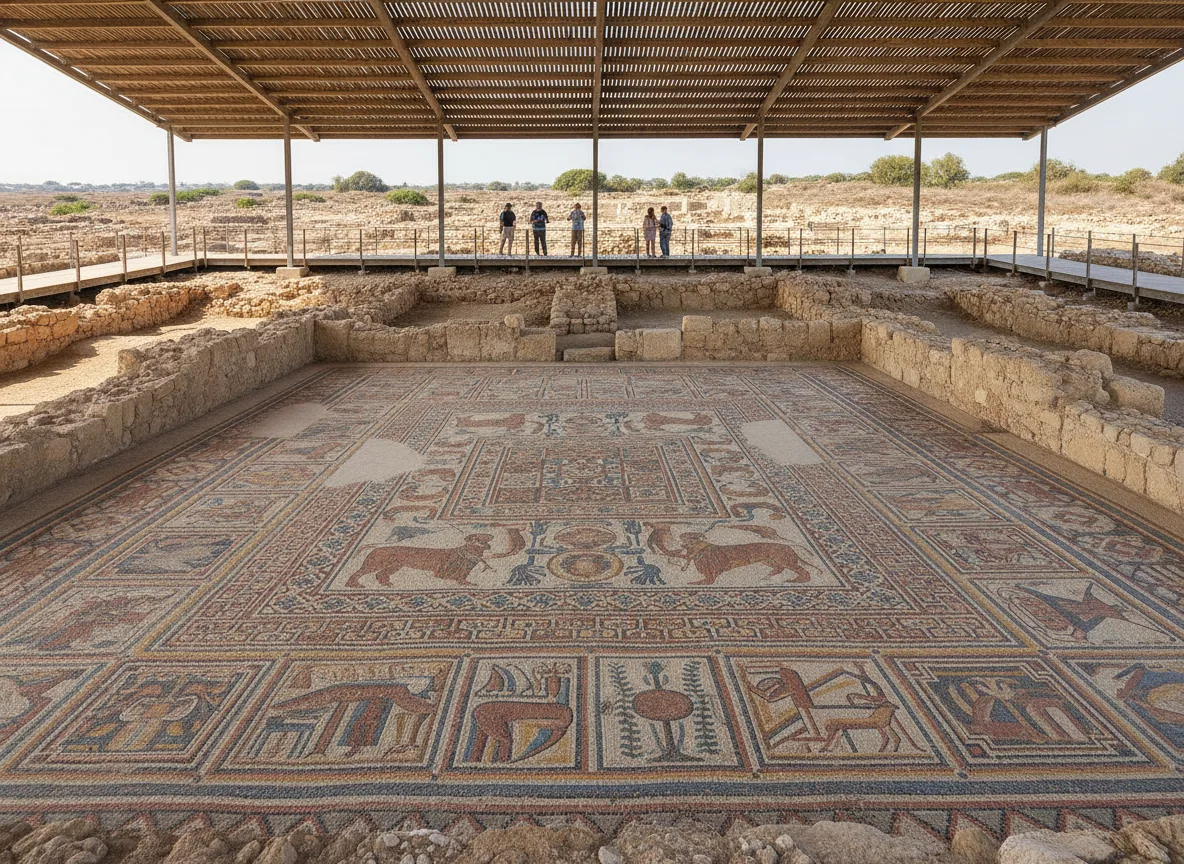
No kato paphos guide is complete without a deep look at the archaeological park, and rightly so. The Paphos Archaeological Park is a UNESCO World Heritage Site containing monuments from the 4th century BC through to the Middle Ages. The headline attractions are the Roman villas, each preserving extraordinary floor mosaics that rank among the finest in the world.
What to See Inside the Park
The House of Dionysos is typically the first stop and the most visited. Its mosaics depict the god of wine surrounded by hunting scenes and mythological narratives, rendered in extraordinary colour and detail. The Narcissus panel near the entrance is a crowd favourite and worth pausing over before the main rooms. Allow at least 30 to 40 minutes here alone. The House of Theseus is larger in footprint and contains the striking mosaic of the first bath of Achilles as well as scenes from the myth of Theseus and the Minotaur. The House of Aion holds five mosaic panels in a single room, each representing a different mythological episode. The House of Orpheus rounds out the main quartet with its depiction of Orpheus surrounded by animals.
Beyond the villas, the park also contains the remains of an ancient agora, an Odeon theatre that is still used for summer performances, a lighthouse and early Christian basilica ruins. A full visit covering all four villas and the open-air areas comfortably takes two to three hours. Arriving at opening time (08:30) means you beat the tour groups and experience the mosaics in cooler, quieter conditions, which matters a great deal in summer.
Opening hours for the Kato Paphos Archaeological Park (verify before your visit, as times are subject to review for 2026):
- Summer (16 April to 15 September): 08:30 to 19:30
- Winter (16 September to 15 April): 08:30 to 17:00
Adult entrance is €4.50, making this one of the best-value UNESCO sites in Europe. Given the scale and quality of what is inside, two to three hours here represents exceptional value. The surrounding grounds and the view of the Odeon from outside the park boundary are free to enjoy, adding further appeal for those exploring things to do in Kato Paphos on a tight budget.
Arrive at the archaeological park at 08:30 on the dot: the mosaics are cooler, the light is better for photographs and you will have the House of Dionysos almost entirely to yourself for the first 20 minutes.
Tombs of the Kings, Paphos Harbour and the Coastal Highlights
Two of the most photographed spots in the entire region sit at opposite ends of the Kato Paphos experience: the ancient solemnity of the Tombs of the Kings and the lively, sun-drenched atmosphere of Paphos Harbour. Both deserve dedicated time and both belong on any honest list of things to do in Kato Paphos.
Despite the name, no kings were actually buried at the Tombs of the Kings. The title reflects the grandeur of the site: a large necropolis with underground tombs carved directly into solid rock, dating from the Hellenistic and Roman periods. Many of the tomb chambers are modelled on houses, complete with Doric columns, inner courtyards and decorated facades. The scale is genuinely impressive and the site feels unlike any other ancient monument in Cyprus.
The Tombs of the Kings are part of the same UNESCO World Heritage cluster as the archaeological park and sit roughly 2 kilometres north of the harbour along the coastal road. Opening hours follow the same summer/winter pattern as the park (08:30 to 19:30 in summer, 08:30 to 17:00 in winter), and adult entrance is €2.50. Prices are correct at time of writing; verify the latest at the Department of Antiquities website before visiting. Combined with the archaeological park, a morning visit to both sites costs under €8 per person and covers the core of any serious Kato Paphos itinerary.
The best approach for a walking tour of these two sites is to start at the archaeological park at opening time, spend two to three hours inside, then walk or take a short taxi north to the Tombs of the Kings for a further 60 to 90 minutes. You will be done before midday, leaving the afternoon free for the harbour or beach.
Paphos Harbour is the social and visual centrepiece of Kato Paphos. The small medieval Paphos Castle sits at the harbour mouth and makes for an unmissable photograph, particularly at golden hour when the stone turns amber in the fading light. The harbour promenade is lined with fish tavernas and cafes, and the water is calm enough that small boats bob alongside while cats patrol the quayside. For sunset views, the breakwater at the far end of the harbour is the local favourite, offering an unobstructed view west across the sea.
For harbour restaurants, the strip directly along the waterfront is convenient but typically priced for tourists. Walk one or two streets back from the waterfront and you will find smaller, family-run tavernas serving Cypriot meze at noticeably lower prices. A full meze spread, with multiple hot and cold dishes, halloumi, fresh bread and a carafe of local wine, represents one of the most satisfying meals the island can offer.
Stay at Lovely Ap
45m² apartment in the heart of Kato Paphos. Walk to everything you just read about.
Check AvailabilityThings to Do in Kato Paphos: Beaches, Boat Tours and Outdoor Activities
 AI-generated image
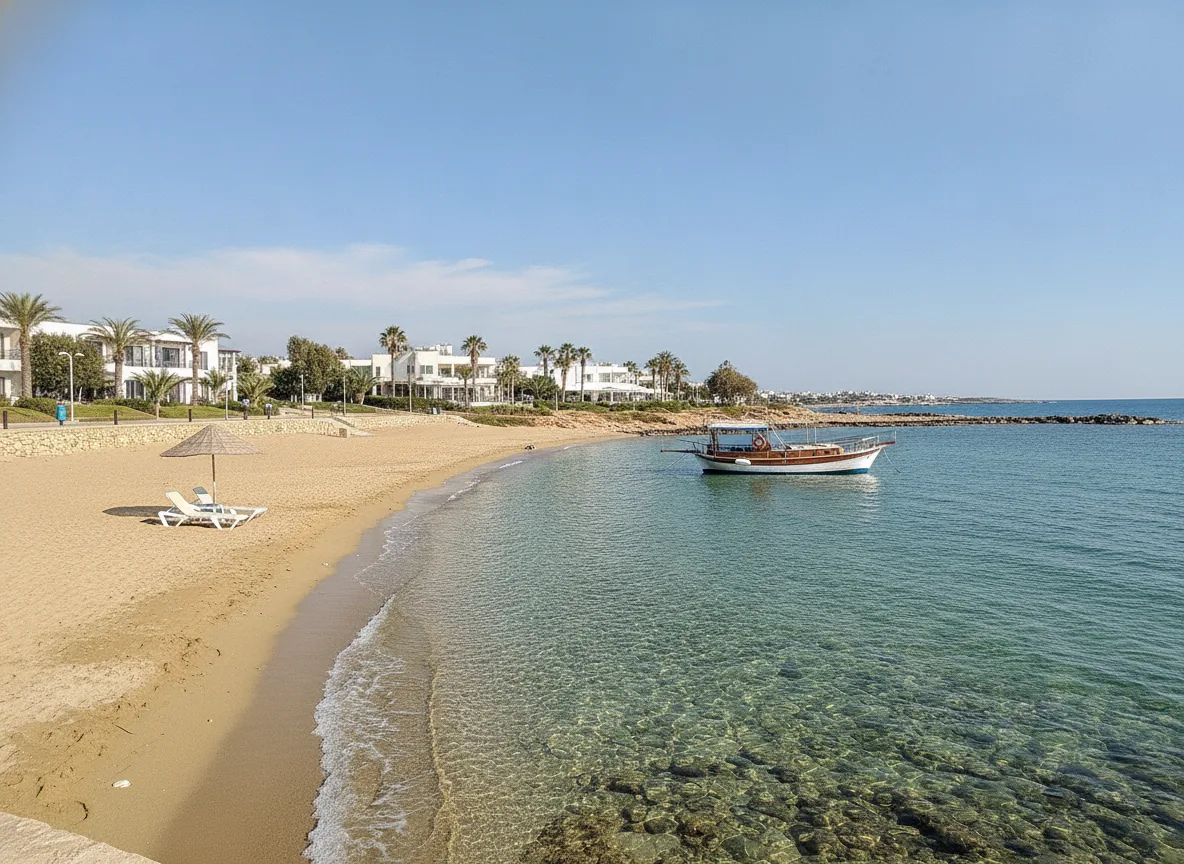
Once the archaeology is covered, the outdoor side of things to do in Kato Paphos centres on the coast. The beach options closest to the harbour area include Alykes Beach and Vrysoudia Beach, both accessible on foot along the coastal path. These are organised, Blue Flag-standard beaches with sun loungers, calm water and good facilities, and they are the most convenient options for anyone staying centrally. Our Paphos beach guide covers every option from the harbour area northward to Coral Bay, with practical notes on facilities and water quality.
For golden sand and a wider bay, Coral Bay is the local benchmark. Located around 10 kilometres north of Kato Paphos, it is reachable by public bus or a short taxi ride and offers the kind of photogenic beach scenery that features on most Cyprus travel photography. The water is clear, the beach is well-maintained, and there are plenty of watersports and hire options on site. This makes Coral Bay the natural focus for a beach day trip, particularly if you want something more expansive than the harbour-adjacent options.
If you want to visit Kato Paphos and explore stretches of coastline that most package tourists never find, we recommend pairing a boat tour with a look at our hidden beaches guide. Some of the quietest coves are only reachable by sea, which makes the boat tours doubly worthwhile.
Boat tours rank among the most popular things to do in Kato Paphos, and for good reason. Tours leave from the harbour and range from short coastal cruises to half-day trips along the sea caves, to full-day excursions reaching Lara Bay and the Akamas coastline. Several operators also run sunset cruises in the evening, combining the famous harbour light with a glass of wine and views of the castle. Booking ahead is advisable in peak summer months, as the most reputable boats fill up quickly.
For families, the Paphos Aphrodite Waterpark is consistently ranked among the top kato paphos attractions in the wider area, with multiple slides and pools suited to different age groups. It is particularly good for a family day when the children need a break from ancient ruins. A jeep safari to the Akamas Peninsula offers a different kind of family-friendly day out, combining off-road terrain, scenic viewpoints and a swim at Lara Bay, where loggerhead turtles nest between June and August. We have more ideas specifically tailored to families in our Paphos families guide.
Wine touring is another excellent option for adults. Cyprus has a long viticulture tradition, and several operators offer guided wine tours from Kato Paphos into the Troodos foothills, visiting traditional villages and small producers. These pair well with a return to the harbour for dinner, making for a well-rounded day that covers both landscape and local culture. For a broader overview of what is available across the region, our Paphos activities guide has the full picture.
Book boat tours and jeep safaris at least 24 hours ahead in July and August: the best-rated operators sell out by mid-morning, and walk-up spaces on the day are rarely available at peak season.
A Practical Kato Paphos 3-Day Itinerary for 2026
The best things to do in Kato Paphos are even better when sequenced logically. Here is a tried-and-tested itinerary that works for most visitors, including those staying in a self-catering apartment with the flexibility to set their own pace. We find that guests who front-load the archaeology and leave the afternoons open for coast and food get the most out of a shorter stay.
Day 1: Archaeological Kato Paphos. Begin at the Paphos Archaeological Park at 08:30. Spend two to three hours moving through the four main villas, the Odeon and the agora ruins. Exit toward the harbour, stop for coffee along the waterfront and take 20 minutes to walk around Paphos Castle. In the afternoon, follow the coastal path south toward Vrysoudia Beach for a swim. Return via the promenade for a sunset drink and dinner at a harbour-side taverna.
Day 2: Tombs of the Kings and Coral Bay. Start with the Tombs of the Kings in the morning before the tour buses arrive. One hour to 90 minutes is sufficient. From there, take the public bus north to Coral Bay for an afternoon on the beach. This is a budget-friendly day: entrance to the Tombs costs €2.50 and the bus fare is minimal. Bring a packed lunch from your apartment to keep costs low and enjoy a long, relaxed afternoon by the sea. Return to Kato Paphos for dinner.
Day 3: Boat Trip and Free Exploration. Book a morning boat tour from Kato Paphos harbour. Most half-day cruises take in the sea caves south of the harbour and return by early afternoon. Spend the rest of the day exploring the back streets of Kato Paphos: the smaller lanes behind the main tourist strip hold local bakeries, kafeneions (traditional coffee houses) and fruit stalls that give a more authentic flavour of daily Cypriot life. Staying centrally, you will know which streets to walk and which shortcuts to take to discover things to do in Kato Paphos that do not appear on the standard tourist map. The kafeneions on the streets running parallel to the harbour are particularly worth seeking out for a slow afternoon coffee.
For those staying longer, days four and five work well as dedicated day trips: Akamas and Lara Bay by jeep safari, or a wine tour into the Troodos mountains, each covering a different face of western Cyprus. The things to do in Kato Paphos extend well beyond the town itself once the core sights are done.
Practically speaking, the best advice for 2026 is to pre-book boat tours and jeep safaris at least a day ahead in summer, carry cash for smaller tavernas and market stalls, use sunscreen year-round (the Cyprus sun is strong even in April and October), and make the most of the flat coastal path for evening walks. The kato paphos attractions are genuinely world-class, but it is the rhythm of the place that makes people return year after year: the early-morning quiet at the ruins, the slow harbour evenings, the fresh fish at lunch.
The principle that underpins this kato paphos guide is simple: the area rewards those who plan lightly, stay locally and walk rather than drive. Nearly all of the kato paphos attractions that matter are within 20 minutes on foot, and the ones that are not are easily reached by bus or short taxi. That walkability, combined with the depth of history, the quality of the coast and the warmth of Cypriot hospitality, is why Kato Paphos continues to be one of the Mediterranean's most satisfying short-break destinations.
Frequently Asked Questions
Stay at Lovely Ap
★ 9.4/1045m² apartment in the heart of Kato Paphos. Walk to everything you just read about.
"Spotless and ideally located. Short walk to the Promenade, excellent restaurants. We'd definitely stay again."
Steven"Check in was easy, communication was good and the location was spot on. Walking distance to Paphos harbour. Extremely well equipped!"
Kirstie"Perfect place to stay to explore Paphos. Everything was great. Perfect location and very clean. 10/10!"
Terry